 August 06 2025, 08:15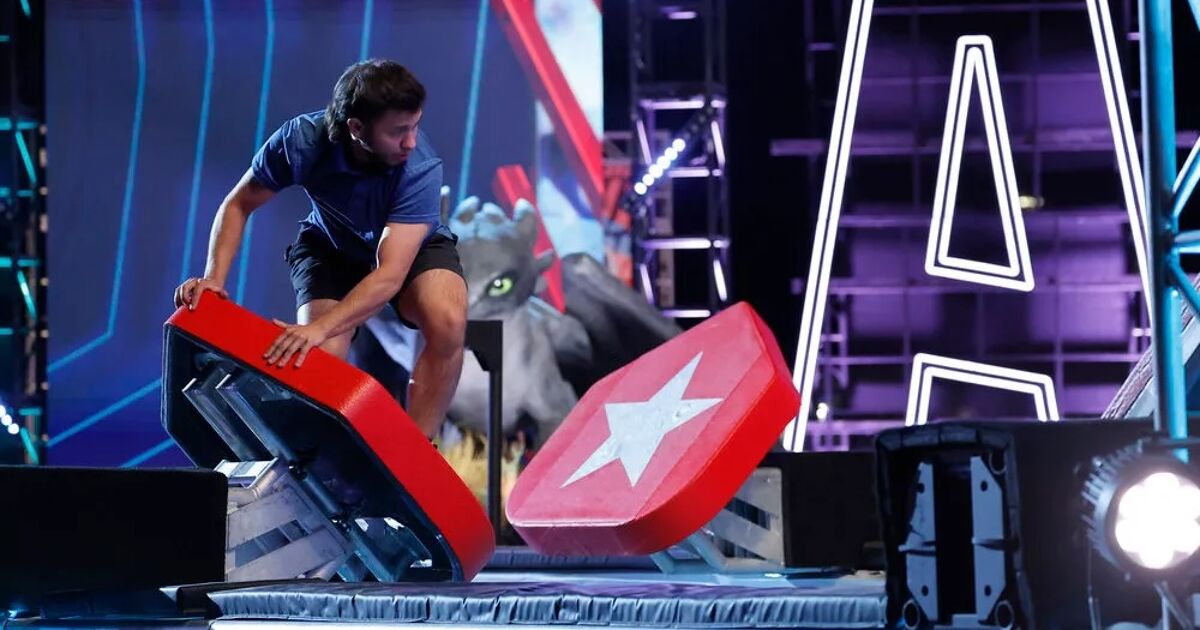
The political conversation around transgender athletes has focused almost solely on trans women, ignoring the untold number of trans men affected by athletic transphobia and sports bans.
For trans male athletes Charlie Hoskins and Clayton Jay Reeves, sports have played a particular role in their transition into manhood. Both shared a struggle to reconcile their version of masculinity with the toxic, misogynist, and transphobic baggage that cisgender men often bring into the sports arena.
Related
This avant-garde trans wrestling group is the antidote to toxic masculinity
The standing room only spectacles are making the latent and self-loathing homoeroticism of WWE wrestling overt.
But both men say their experiences have also made them rethink their own concepts of masculinity, a process beset with social challenges and euphoric opportunities.
A “real runner”
Never Miss a Beat
Subscribe to our newsletter to stay ahead of the latest LGBTQ+ political news and insights.
Subscribe to our Newsletter today
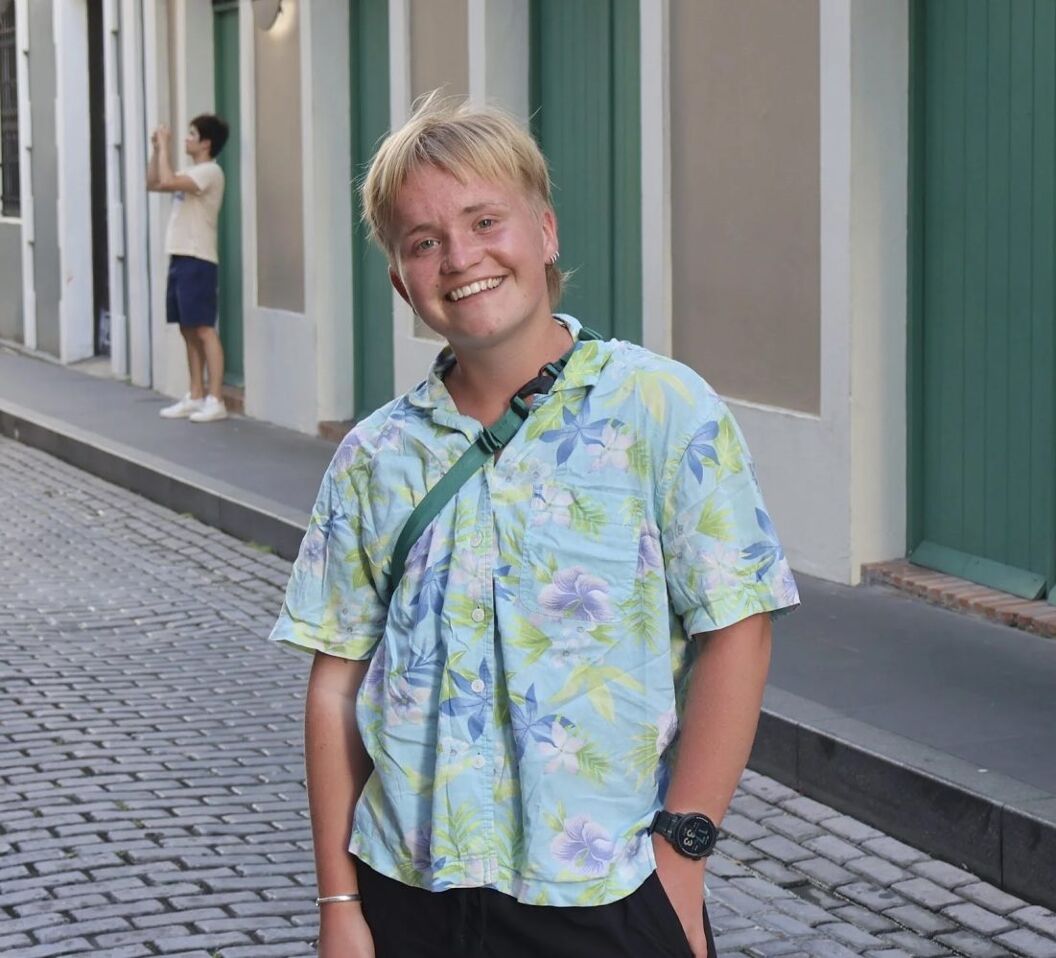
“There are a lot of men who have this kind of toxic idea about what a ‘good runner’ or a ‘real runner’ looks like, in a way that I really despise,” says Charlie Hoskins, (22), a transgender male member of New York Road Runners and a recent Columbia University graduate.
At 5’2 and 125 pounds, Hoskins is not, in his words, “like, the biggest guy ever,” but he’s terrifically fast.
“So when I’m running races or even just going for a run, I often find that cis men don’t like it when I overtake them. And I take that as an invitation to prove that I’m faster than they are,” he says.
Originally from Australia, Hoskins knew early on he was different — or actually similar to his two brothers.
“At six or seven, I insisted on everyone calling me Charlie, and I dressed up just like them, and I wanted to do the things that all the boys were doing in school. But then I kind of repressed that for a really long period of time,” Hoskins recalls. He started his transition at Columbia.
“In Australia, masculinity is very, like, ‘blokey’ in a way that I don’t really relate to,” he says.
“Having two brothers, I know that my masculinity is definitely very different to both of them. My younger brother plays rugby, and so his masculinity is very ‘gym-bro,’ sinking pints with his friends at the pub after rugby games. And I’m like, that’s nice, but it’s not really how I relate to masculinity at all.
Hoskins says his idea of masculinity centers on his self-knowledge about his identity as a trans man. He doesn’t really feel either the need or the desire to fit into traditional forms of masculinity, “whatever that kind of looks like” he says.
But even in a liberal enclave like Columbia, Hoskins’ version of masculinity has run up against more traditional ideas about the concept.
“I had a really terrible experience when I just started at Columbia — and was still pretty femme-presenting — with the president of the Columbia Road Runners being surprised when I was in the same corral as him at a race,” Hoskins says. “Now that I present more masculinely, there’s still the same kind of shock and surprise when I can be faster than cis men.”
Hoskins says it’s hard to distinguish where that surprise originates.
“I’m pretty open about the fact that I am a trans guy. I don’t hide that at all,” he says. “But I am pretty small, and I think a lot of people then don’t consider me to be as fast because I’m not as tall and muscular or whatever. But also because I am trans.”
In the face of that tension, Hoskins is “trying to focus more on carving my own space and not really worrying about what other male athletes are doing.”
“Men want to dominate me“
“Before you meet me, when you just look at me, you probably think that I am a very masculine guy,” says Clayton Jay Reeves, 25, a competitor this season on the popular American Ninja Warrior reality competition on NBC. He’s one of the first two trans male competitors ever to tackle the show’s challenging obstacle course.
“But then when you meet me, when you meet my personality, I am very feminine. People assume I’m gay all the time because I love to be around women, but the only reason why I connect better with that scene — with the girls and the gays — is because they just make me feel more comfortable in my body compared to men.”
“Men want to dominate me,” he says.
At the ninja gym in Iowa where Reeves trains — one among hundreds across the country that are the equivalent of baseball’s “farm system” where new talent is discovered — he’s encountered toxic masculinity repeatedly.

For “guys who don’t know I’m trans, I fit in pretty well,” says Reeves, whose 5-foot height and 117-pound weight belies his strength and agility.
But he’s witness to displays of cockiness and arrogance from cis men, and continually disappointed with the way they talk about women.
“They’re trying to make themselves feel more empowered, I guess,” he says.
For some cis men who do know Reeves is trans, there’s another level of dominance, and mistrust.
“When they figure out I’m trans, that’s when it’s like, ‘Oh, I already knew, because your voice is pretty high’ — which I actually don’t think it is — ‘and you’re short.’ And it’s like, ‘Those two are both genetic things, so I don’t know why you would think that,'” he says.
“When I don’t come out to someone, it’s like, ‘Oh, you tricked me. Oh, you’re lying to me.’ ‘No, it’s not about that. It’s for my safety. You just don’t understand, because you’re more privileged than I am,’ right?”
In his day-to-day life living in the “very conservative state” or Iowa, he says he’s definitely not as open about being trans, just for his safety.
Men also “always have to ask me the most disgusting questions, and not in an educational way, but more like they want to be better than me.”
“How much can you bench press?” is among the least offensive queries.
Men behaving badly have also reached into both Reeve’s friendships and his qualifications for American Ninja Warrior.
One gym friend, jealous that Reeves advanced on the show, lashed out, telling him, “‘You only got on the show because you’re trans,’ and outing me to everyone. We were really, really good friends. I’m kind of sad and kind of confused how he just turned on me because of that, but that’s toxic masculinity for you, that’s ego for you, that’s thinking that you’re better than someone.”
The runner’s high
For both athletes, coming to grips with other men’s egos counts as one more challenge among many in their transition to manhood. But grappling with it pales in comparison to the euphoria their transition has granted them.
Hoskins likened his euphoria to the “runner’s high,” the feeling of elation, relaxation, reduced anxiety, and increased pain tolerance caused by endorphins during prolonged exercise.
“I remember the first time I went running after I’d had top surgery, and it was like runner’s high times a million. It felt so good to be running, which is a sport that I love, with a body that felt like my own in a way that it hadn’t ever felt before.
“When you run, you have such a control over your body,” he continues. “And there’s such a rush that comes with that. And I think that when you transition, you have moments of gender euphoria that feel very similar to that runner’s high, like you were doing something for yourself and you’re having the best time enjoying it.”
Reeves agrees that sports supercharged the euphoria that began with his transition.
“Sports just obviously helps with mental health, and it helps you look good and feel good, both physically and mentally,” he says.
“The more I run, the more I do push-ups, pull-ups, develop a chest — like, a masculine chest — just doing a good workout when I feel like I’m jacked, it’s made me more confident in my gender identity, and that’s when you feel euphoric in your body.”
While Reeves and Hoskins both excelled in sports as children, that feeling of euphoria associated with sports alone eluded them.
Hoskins says that every Australian child igrows up playing sports, but he had never been the best at soccer because of his “terrible” hand-eye coordination. However, he began running and gradually improved at track events, eventually representing his state in national competition.
“It was a really great time to be a girl and running,” he says. “There were so many phenomenal female athletes at the moment, and it was like, ‘Yeah, it’s really cool to kind of be a part of that,’ right?”
But Hoskins says his ability in girls’ sports was at odds with something deeper.

“I always felt kind of separated and out of place among the other girls that I was competing against,” Hoskins says. “I always kind of had issues with my body, and I never really knew why. Like, I wasn’t the image of a female runner, which I’d say is taller and skinnier and whatever. And then when I hit puberty, it became more complicated. But I was like, ‘Oh, I’m just different.'”
Incongruously, it was Hoskins’ talent for girls’ sports that led him to realize that his gender didn’t align with his body.
“I started having these realizations like, oh no, I really was competing against female athletes, but I didn’t feel like a girl. I just didn’t know that that’s what it was,” he says.
Like for Hoskins, Reeves’ talent for sports revealed a gender incongruity.
As a kid, “I was just into as much sports as I could be: flag football, soccer, cross country, track, basketball,” Reeves says. What he stayed away from were sports that were highly segregated by gender.
“Track and cross country are gendered sports, because women do run with women, and men do run with men. But we all train together,” he says. But scholastic volleyball “is just a girls’ sport, you know? [Softball] is just a girls’ sport. So I tried to stay away from those. I probably would have played, but I just felt too dysphoric to play those kinds of sports.”
“I actually wanted to do gymnastics,” Reeves adds, but the leotards were a deal-breaker.
While he “officially knew something was up” with his gender identity around age 14 — “that’s when I started going through female puberty” — he kept it to himself.
“I just felt like an outcast, and I just felt like something was wrong. But I didn’t know if it was like everyone feels this way as a young kid.”
The flip side of toxic masculinity
With time, introspection, and changes in circumstances — Hoskins relocated to New York for college, while Reeves experienced homelessness after a falling out with his family — both men came to embrace the differences sports and their gender dysphoria revealed, and they both started their transitions.
Their relationship with masculinity is evolving.
“Something that I’ve been more aware of now that I’ve transitioned is, in being perceived as a man, how I can show up for women,” Hoskins says.
Hoskins says he has become more aware of how his masculine presentation impacts girls’ and women’s feelings of safety, whether on the nighttime streets or in other spaces where they don’t feel safe. He has begun taking a more protective role with his female friends “because now I present in a way that affords some kind of privilege to me.”
It’s the flip side of the toxic masculinity that Hoskins deplores, and evidence trans men can choose to define masculinity however they choose.
Asked to define what kind of man he is, Hoskins says, “I consider myself to be a very chill, nerdy, outdoorsy guy. I love staying at home and reading. I like going hiking. I like being around my friends and not taking life too seriously.”
“My masculinity,” says Hoskins, “is more fluid than the conventional kind of thing.”
Hoskins’ lean into chill contrasts with Reeves’ very public role representing trans men on the national stage that American Ninja Warrior affords him.
“I’m proud to be on American Ninja Warrior, and I love going on TikTok Live and stuff. I’m getting so many comments from trans youth, and also moms commenting like, ‘You’re an inspiration. You’re really helping my kid feel more confident in their body and about who they are, and now they’re inspired to become whatever they want.'”
“Transgender is a label, but it’s not holding us back,” Reeves says. “It doesn’t make us weak. It actually, if you think about it, can make you stronger.”
“Like I said, I’m in touch with my feminine side,” Reeves adds. “I’m a very emotional guy, and a lot of cis men will think that that is weakness. But I think it’s a superpower.”
Subscribe to the LGBTQ Nation newsletter and be the first to know about the latest headlines shaping LGBTQ+ communities worldwide.