 October 31 2025, 08:15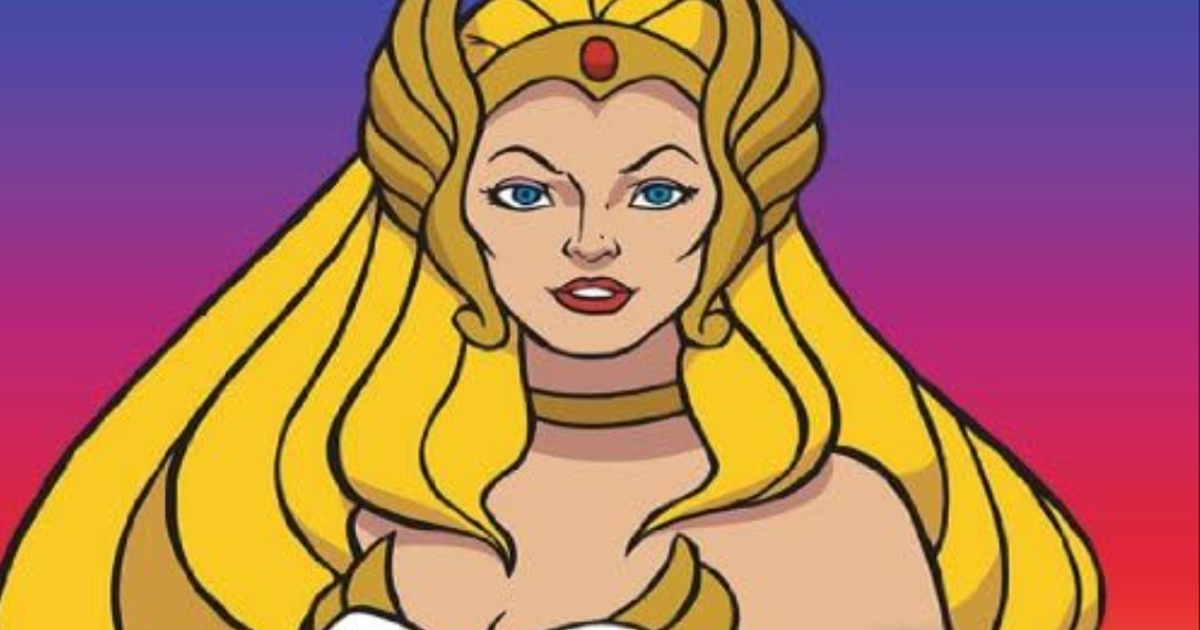
LGBTQ+ animation fans have always joked that Prince Adam, the alter ego of He-Man, was gay. He wore a pink shirt, baked for a hobby, and, as queer artist and designer David Mason Choplecki put it, “He gets fabulous secret powers the day he draws out his sword.” But in that interview, he adds, “I wouldn’t be surprised if these guys didn’t know what they were doing, if they didn’t have an agenda and they were just sort of making it.”
According to Erika Scheimer, the creatives at Filmation Associates—the studio behind He-Man: Masters of the Universe and She-Ra: Princess of Power—indeed knew. Prince Adam was always designed as a “soft prince,” she told Men’s Health in 2020, adding, “It was a joke in the studio; everybody was saying, ‘Prince Adam is gay.’” But this wasn’t homophobia—she says many of Filmation’s artists were glad to see themselves on screen.
Related
Enjoy these 20 LGBTQ+ cartoonists who draw outside of the lines
Scheimer is the daughter of Filmation co-founder Lou Scheimer. Since she was a little girl, she provided a number of voices for the studio, eventually becoming voice director for shows like He-Man and She-Ra. It’s her voice you hear at the end of nearly every episode of She-Ra delivering the moral. And she is an out lesbian who describes Filmation as a “wonderful stomping ground of life, filled with all sorts of characters, some of whom were gay. It was a very homey environment.”
“Filmation was one of the gayest places in town,” she said in a 2007 Prism Comics interview. “We’re talking about a bunch of artists here! Oh, my God—it was a hoot and a half! And in terms of tolerance and in terms of creative freeflow, there was no sense of shame around any of that. It absolutely was really a kind of safe haven.”
Never Miss a Beat
Subscribe to our newsletter to stay ahead of the latest LGBTQ+ political news and insights.
Subscribe to our Newsletter today
Scheimer felt so accepted at home and at the studio that she came out very young. “By the time I was twelve, I knew that I liked girls, too. I had feelings for girls and boys… I grew up in a really wonderful environment that allowed me to feel all my feelings and not feel they were wrong.”
In 2011, she spoke more about her family’s openness and how it translated into the studio.
“Growing up, my dad always taught me honesty was the best policy. So when it came up, I just thought, ‘Why not? I’m not ashamed of it and neither are my parents,’” she told Gay.net. “Plus, there were a lot of talented gay people working at Filmation. Even my dad would probably say he was gay in another life. He loves everybody and he’s always kissing on girls and boys alike.”
That’s what made Filmation shows, particularly He-Man and She-Ra, so popular in queer communities, Scheimer told Gay.net. She called She-Ra a “great feminist… that’s appealing to all of us minorities out there.”
“Women and gay people have to go through a lot, and we know what it’s like to be labeled and told you can’t be one thing or another. I think She-Ra breaks that mold and she speaks to boys every bit as much as she does girls,” she said.
In the 2011 interview, Schiemer mentions that if She-Ra were made today, “and if I had any say in it, we absolutely would introduce a gay character.” The interview was long before the 2018 Netflix reboot created by transgender cartoonist ND Stevenson. That show was praised by critics for not just normalizing queer couples in a children’s show, but by building Adora (She-Ra’s alter-ego) and Catra’s relationship slowly and naturally—a decision made, Stevenson said, that was made for a practical reason.
“My big fear was that I would show my hand too early and get told very definitively that I was not allowed to do this,” he told Gizmodo in 2020. “I sort of had a plan and it was like: If I can get them to this place where their relationship and that romance is central to the plot, and it can’t be removed, can’t be noted-out, or it can’t be something that’s cut later, then they’ll have let me do it.”
Though Scheimer left the animation industry when Filmation closed in 1989, the mark she and all the others at the studio left is immense. Though they couldn’t get away with making explicitly queer characters at the time, creatives like her made it obvious, even if it wasn’t canon. And thanks to her and her colleagues, the children’s cartoon landscape is a lot queerer with shows like Steven Universe, Dead End: Paranormal Park, and OK K.O.! Let’s Be Heroes.
Subscribe to the LGBTQ Nation newsletter and be the first to know about the latest headlines shaping LGBTQ+ communities worldwide.