 December 12 2025, 08:15
 A teacher in Hungary who is facing a prison sentence for organising a Pride march following the country’s draconian ban on LGBTQ+ events remains defiant amid criminal charges.
Back in March, the central-European country’s government, led by prime minister Viktor Orbán’s ruling right-wing Fidesz party, passed into law a ban on LGBTQ+ Pride marches – which supporters of the bill claimed are “harmful to children”.
Orbán, who has been the Hungarian prime minister since 2010, is vehemently anti-LGBTQ+ and during his time in office has legislated against queer parents, approved a copy-cat Russian-style anti-LGBTQ+ propaganda bill for Hungarian schools and claimed “no money in the world” would make him accept so-called LGBTQ+ “propaganda” after the EU froze funding to the country in response to its vile law. Perhaps unsurprisingly, Orbán has courted support from US president Donald Trump whose own government has been enacting attacks on the rights of queer American citizens.
The Pride ban allows the country’s police forces to use facial recognition technology to identify anyone attending the marches, alongside issuing finds for both organisers and attendees.
In the wake of the ban, there have been several protests attended by thousands of Hungarians – including a tongue-in-cheek ‘Grey Pride’ event – alongside vows from organisers to go ahead with Pride marches despite the legal risks, pledges from European politicians to attend marches in defiance and official condemnation from EU member states.
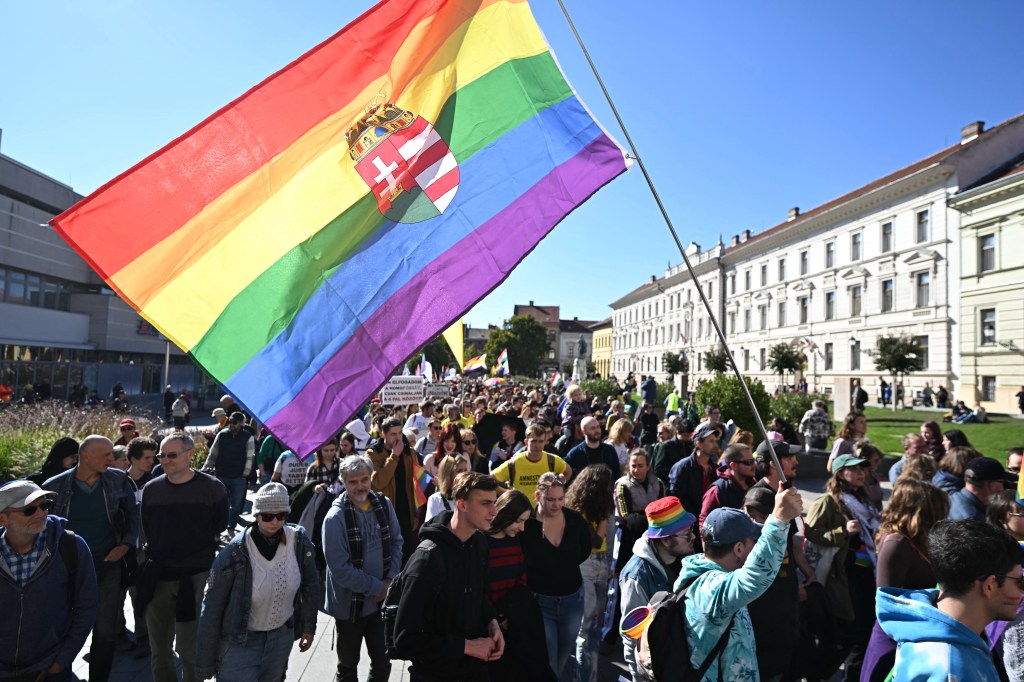
One such event that went ahead in spite of the ban was Pride in the southern city of Pécs, which is located closely to the Croatian border.
Géza Buzás-Hábel, who lost his job as a teacher last year due to this LGBTQ+ activism, said the decision to hold the event was because “Hungary must remain a European country”.
“Freedom of assembly is a fundamental human right,” he told The Guardian, “and we cannot allow political decisions to limit our community’s visibility or self-expression.”
Organised by the Diverse Youth Network, a group which was co-founded and is led by Buzás-Hábel, the Pécs Pride march took place on 4 October.
“If we don’t stand up for ourselves here, then where?” Buzás-Hábel said. “Pride is not just a march – it is a message: queer people exist even when others try to silence or ban us.”
Days after the march, Buzás-Hábel was summoned for police questioning and subsequently his case was forwarded to the prosecutor’s office with a recommendation to press charges, which include organising and calling for participation in a prohibited assembly.
Buzás-Hábel said he could face a three year suspended prison sentence for organising the event.
“Freedom sometimes comes at a high price”
In response to the charges, Amnesty International condemned his treatment and created a letter writing campaign, where people could email the prosecutor’s office.
“Amnesty International calls on the Prosecutor’s Office to immediately close the criminal proceedings, which constitute an undue interference in the exercise of the rights to freedom of peaceful assembly, freedom of expression, and non-discrimination under European and international human rights law,” the human rights organisation’s description of the case reads.
“This case marks a troubling escalation in the criminalisation of LGBTI+ expression and peaceful assembly in Hungary.”
In a joint statement, human rights groups in Hungary described Buzás-Hábel’s treatment as “not a local anomaly” but a “turning point for the European Union”, stating: “This is the first known case in the European Union where a human rights defender faces criminal prosecution for organising a Pride march — a step until now only seen in Russia or Turkey.
“For the first time in EU history, a person is facing criminal charges for organising a Pride march: an act protected under the EU Charter of Fundamental Rights (the Charter), the European Convention on Human Rights (ECHR), and the values defined in Article 2 TEU,” the statement reads, adding: “This case exposes a dangerous shift in Hungary’s long campaign against LGBTQI people and civil society.”
If criminal law can be used in an EU Member State to punish someone for organising Pride, the
precedent will embolden others to follow. It marks the first breach of the EU’s internal firewall against
authoritarian legalism — the point where Russian-style repression enters the Union’s own legal space.
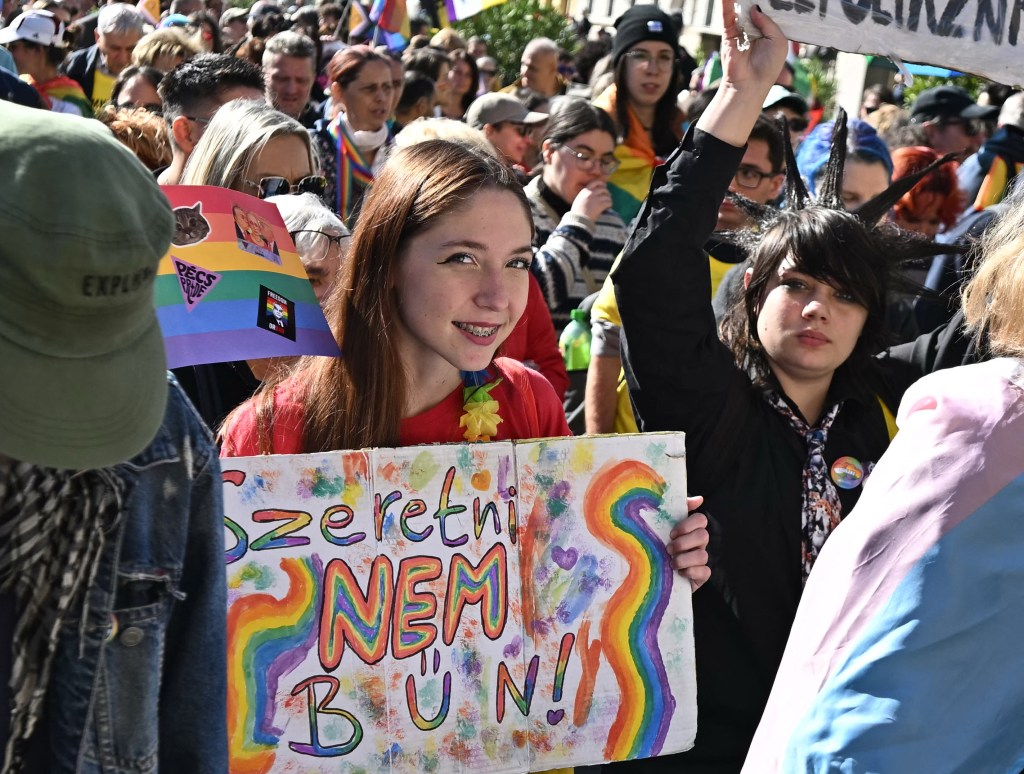
Buzás-Hábel, however, says the whole situation is much bigger than the criminal charges he individually faces.
“This is not really about me. In the eyes of those in power, I am just a speck of dust,” he said. “This is directed at my broader community, and the goal is to intimidate the people around me. They are using me as a tool to set an example for the entire country.”
He continued: “I have already experienced the personal cost of this system: I lost all my jobs, I was placed under secret service surveillance, and I now face potential criminal charges.
“But none of this changes the fact that I would organise Pride again in exactly the same way – and I will do so next year as well.
“For me, it is not just an event, but a stand for all those who need visibility and courage in such a hostile environment.
“Freedom sometimes comes at a high price, but the only thing I would truly regret is failing to stand up for my community.”
The post Teacher facing jail for throwing Pride march regrets nothing: ‘Queer people exist’ appeared first on PinkNews | Latest lesbian, gay, bi and trans news | LGBTQ+ news.