 October 23 2025, 08:15
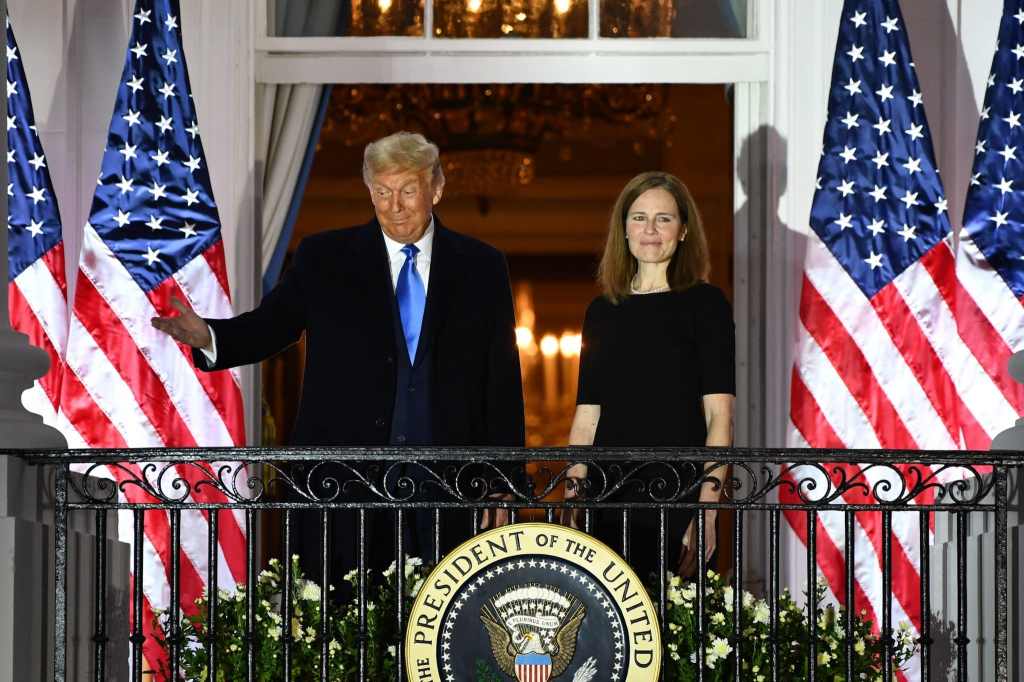
 Conservative Supreme Court justice Amy Coney Barrett has signalled that marriage equality is unlikely to be overturned in the US, given it has resulted in “very concrete reliance interests”.
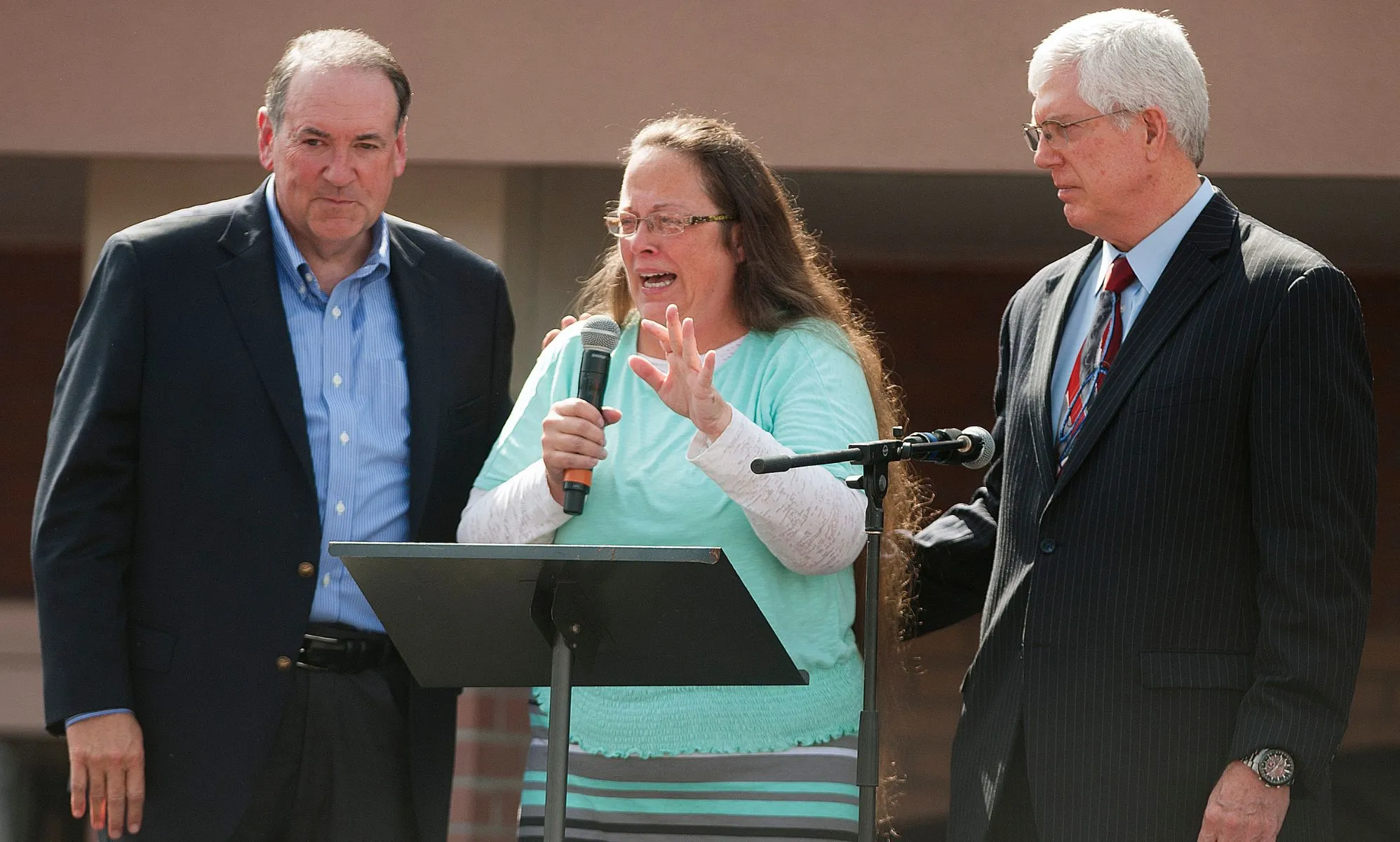
Back in August, former Kentucky county clerk Kim Davis petitioned the court to hear her appeal case against a $100,000 jury verdict for emotional damages and $260,000 for attorneys fees after she refused to issue marriage licences to same-sex couples in 2015 following the landmark Obergefell v. Hodges ruling, which legalised same-sex marriage across the United States.
Davis’ attorney Mat Staver said her appeal is based on religious objections to same-sex marriage and the petition itself reads that it “presents the ideal opportunity to revisit substantive due process that ‘lacks any basis in the Constitution.’”
“Obergefell was egregiously wrong, deeply damaging, far outside the bound of any reasonable interpretation of the various constitutional provisions to which it vaguely pointed [and set out] on a collision course with the constitution from the day it was decided,” Staver said.
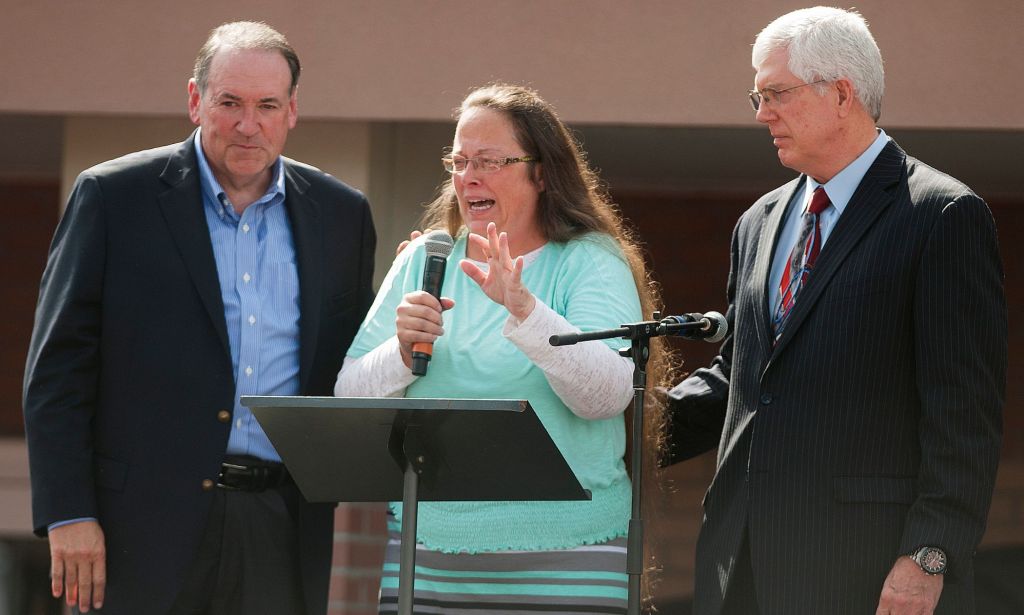
In essence, Davis is attempting to use the case as a means of overturning same-sex marriage. The Supreme Court denied a similar appeal filed by Davis in 2020.
Whilst many believe it is unlikely same-sex marriage would be overturned – given the wide-ranging social, legal and economic issues reversing the decision would have across the US – many queer people fear that in the anti-LGBTQ+ climate of the Trump administration such a move is indeed increasingly possible.
In an interview with the New York Times’ Ross Douthat, Barrett – who was nominated to serve the court by Donald Trump in 2020 – described reliance interests as “things that would be upset or undone if a decision is undone”.
The Justia Legal Dictionary defines reliance interests as referring “to the stake of an individual or party in a contract that has been violated, desiring to be reimbursed for any losses or expenses arising from depending on the contract”.
Discussing the Obergefell v. Hodges ruling, Douthat asked if the decision created “social reliance interests in the sense of people making life choices on the basis of a right being protected”, adding: “One of the arguments for why Obergefell v. Hodges is unlikely to ever be overturned is the idea that people have made decisions about who to marry and therefore where to live and children…Everything else, on the basis of that ruling.”
Barrett said she would not classify those reasons as “social reliance interests” because they are “absolutely reliance interests”.
“That kind of sounds like in things in the air. Those are very concrete reliance interests,” she said.
“So those would be classic reliance interests in the terms of the law, in terms of legal doctrine… Those are financial. Those are medical.”
If the the Supreme Court does decide to hear Davis’ case and does vote to overturn same-sex marriage, it is very likely that equal marriage would return to how it was prior to Obergefell vs. Hodges – whereby the legality of same-sex marriage was decided on a state-by-state basis.
Same-sex marriages laws once again being decided on a state-by-state basis would be similar to what happened in the case of Roe v Wade – a landmark 1973 ruling which legalised abortion across the US and which was overturned in 2022 – which has since seen several Republican states heavily restrict access to abortion.
This means the states which either explicitly banned or did not perform same-sex marriages prior to the Obergefell vs. Hodges ruling could return to that, rendering the unions of married couples living in those states void.
However, in this worst case scenario, the Respect for Marriage Act – signed by Joe Biden in 2022 – would mean that states opposed to same-sex unions would have to at least recognise unions from other states where they are legal.
The Respect for Marriage Act requires that “interracial and same-sex marriage must be recognised as legal in every state in the nation”.
The post Conservative Supreme Court justice signals future of equal marriage could be secure appeared first on PinkNews | Latest lesbian, gay, bi and trans news | LGBTQ+ news.