 November 08 2025, 08:15
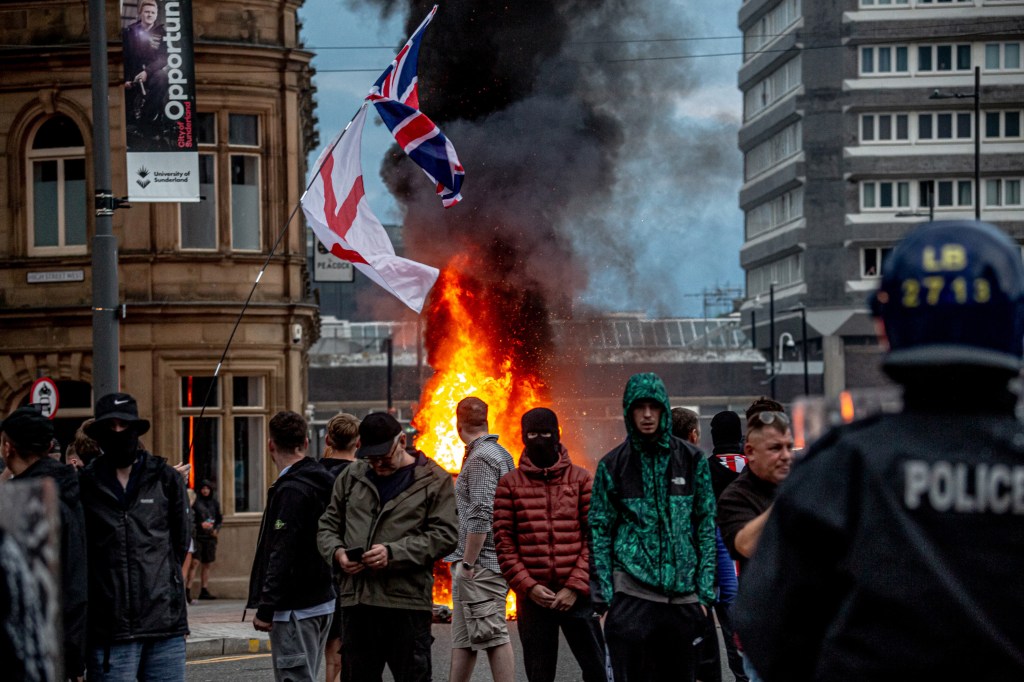
 Britain feels more divided than ever, a new poll shows, with a growing number of people believing culture war issues are splitting the nation, findings that come as new government anti-terrorism data shows record referrals for extreme right-wing ideology.
The findings come from a new study conducted by the Policy Institute at King’s College London and public opinion research firm Ipsos, with bosses behind the poll saying the results show “a frightening increase in the sense of national division and decline in the UK in just a few years”.
The poll – which interviewed 4,027 people aged 16+ between 21 and 27 August 2025 – revealed there is no longer a majority of British citizens who feel ‘pride’ in their country, there are rising tension between those who are immigrants and British born, more people are feeling nostalgia for the past, many believe the country is changing too quickly and culture war issues are seen as a key dividing issue.
Overall, Reform UK was the only political party where a majority (58 per cent) of supporters believe the UK is very divided – nearly double the number of Conservative (33 per cent) and Labour (31 per cent) supporters who say they feel the same. Those who support the Green Party fell in the middle at 46 per cent.
A vast majority of those who back Reform UK (83 per cent) also believe the country is split by culture war issues.
Specifically, the study found that nearly two thirds of the public (64 per cent) agree that culture wars are a serious problem for UK society and politics, an increase from 52 per cent in 2023 and 44 per cent in 2020. Alongside this, in the last two years the number who strongly agree with this belief has doubled from 10 per cent to 20 per cent.
The number of people who believe trans rights have gone ‘too far’ has more than doubled from 2020, up from 17 per cent to 39 per cent – the figures show that there is still no overall public consensus on the matter.
Further to this, proportion of people who say trans rights have gone too far has doubled in all age groups including the 16-24 demographic where one in five (19 per cent) now belief this, this is up compared with around one in 10 (9 per cent) in the same age group in 2020.
However, young people are still more likely to say trans rights have ‘not gone far enough’ at just over a third (36 per cent).
These figures come in the wake of the controversial decision that handed down by the UK Supreme Court in the case of For Women Scotland vs Scottish Ministers, which ruled the definition of “sex” for the purposes of the 2010 Equality Act meant biological sex only.
In the wake of the decision, the Equality and Human Rights Commission (EHRC) – the UK’s human rights watchdog – published and then subsequently withdrew interim guidance which recommended that organisations, businesses and service providers should not allow trans men and women to use single-sex services and spaces, such as changing rooms and toilets, which aligned with their gender. It also added in “some circumstances”, trans people could be barred from spaces that align with their “biological sex” as well.
The EHRC later clarified these “circumstances” referred to situations where “reasonable objection” could be taken to a trans person’s presence, such as in female spaces, when “the gender reassignment process has given [a trans man] a masculine appearance or attributes”.
The court ruling was seen as a victory for women by gender-critical groups, prompting JK Rowling to celebrate “TERF VE Day“. However, LGBTQ+ and human rights organisations warned it could lead to the “widespread exclusion of trans people from many public spaces” and cost businesses huge sums of money to make their facilities compliant.

The poll also asked respondents about the word ‘woke’ and found that more people (46 per cent) see it as an insult nowadays compared with two years ago (42 per cent) or in 2020 (24 per cent). By contrast, one in five (22 per cent) continue to take the term as a compliment, while another one in five (19 per cent) say they do not know what it means.
It is amongst young people that the biggest rise in the belief that woke is an insult has happened – with an increase from 27 per cent to 38 per cent – meaning this group are near enough split down the middle on whether they see it as a criticism or a compliment.
Alongside culture war issues, immigration was cited as a driving factor of feelings of division.
The survey revealed that the number of people who believe there is tension between immigrants and British born people born current stands at 86 per cent, increasing from 74 per cent who felt there was tension in 2023.
Reform UK supporters were the most likely to say there is a great deal of tension over immigration (74 per cent), followed by Conservative backers (48 per cent). Greens were the most likely to say there is not very much tension, at 16 per cent.
Commenting on the results, Gideon Skinner, senior director of UK Politics at Ipsos, said that “continued global and domestic disruption and fragmentation” is reflected in the study, which “illustrates how the narrative around culture wars is intensifying in the UK”.
“Perceptions of political and cultural disharmony are growing, reflecting a society grappling with nostalgia, the pace of change, and growing tensions over immigration, and with polarised views over what terms like ‘woke’ signify,” Skinner said.
“These views are most notable among Reform UK supporters, with the party becoming a home for those concerned about the pace of change, and to a lesser extent among older people, but we’re seeing changes across society, including among younger people too.”

The senior director continued: “At the same time, we need to be aware of the nuance in public opinion on this topic.
“On many issues there is no clear consensus, with a need to understand the differences under the topline figures; it should not be forgotten that many people are not on the extremes in their views; some tensions such as over Brexit are lessening; and in most cases only a minority say they can’t be friends with supporters of opposing political parties (although Reform again provokes stronger feelings).
“The challenge is to understand the roots of these divisions and use these insights to create dialogue and policy that can help reduce further polarisation.”
The findings of the survey come as the UK government released latest data for its anti-terrorism scheme Prevent, which showed a record number of referrals were made to the scheme in year up to March 2025 with extreme right-wing concerns accounting for 21 per cent of referrals.
The data, published by the Home Office on 6 November, revealed there were 1,798 referrals for concerns over extremist right-wing views, an increase from 1,314 cases (19 per cent) on the previous year.
However, the categories of cases where no specific ideology was identified accounted for the largest proportion of referrals at 4,917 (56 per cent).
In cases where ethnicity was specified (4,203), 65 per cent (2,747) of referrals were recorded as white, 19 per cent (798) Asian, 8 per cent (320) Black and 8 per cent (338) defined as ‘other’.
The post Culture wars have left UK more divided than ever, poll finds, and right-wing extremism is rising appeared first on PinkNews | Latest lesbian, gay, bi and trans news | LGBTQ+ news.